
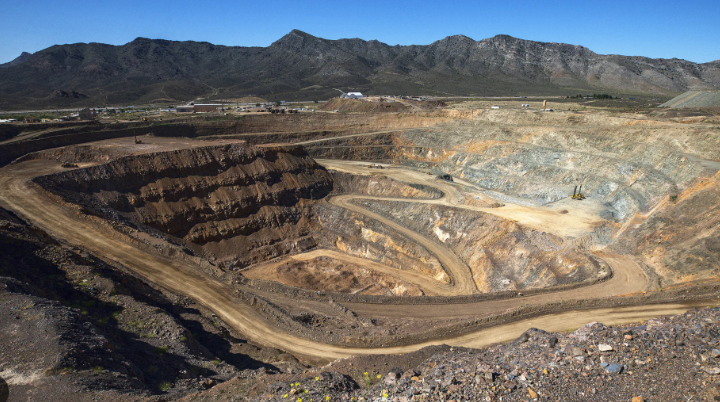
Aerial view of Mountain Pass REE mine in California.
Facts
Find clear, reliable information about the proposed Sheep Creek Mine and why its location in the Bitterroot headwaters matters.
Frequently Asked Questions
Our Team is working diligently to learn as much as possible about the proposed mine at Sheep Creek, in Bitterroot River Headwaters. We will regularly update this page with new information. Our goal is to keep you informed about status or proposal updates, the ways in which proposed activities could impact our waters and our community, how you can stay engaged, and more.
There is much more we still need to understand about the proposed mine.
The exploration company, US Critical Materials, makes many public claims explaining their commitment to transparency and communication. However, very little information has been shared. Local leaders have made multiple attempts to meet with US Critical Materials and received no response.
If you come across additional resources that expand our understanding of the situation, please email them to us through Contact@DontPolluteTheRoot.com
Potential Impacts to the Bitterroot
1. What are ‘headwaters’ and why is it a uniquely terrible location for a mine?
‘Headwaters’ describes the uppermost part of a stream or River. ‘Headwaters’ is where a River starts, where it originates. Because a headwaters is at the top of a river, any pollution in this origin area will be carried by the water all the way downstream, affecting the rest of the river. To pollute a headwaters area is to pollute the whole rest of the system. Water originating from Sheep Creek flows through the entire Bitterroot River.
Imagine: if you poured a milkshake on the middle of a slide, it would cover the bottom half of the slide in sticky milk. If you pour the milkshake at the top of the slide, or at the ‘headwaters’, it will flow through the whole slide, making it sticky. In our case, the Bitterroot River Headwaters is also above two critical water sources for our communities. The proposed mine location is directly above Painted Rocks Reservoir, a critical water source for irrigators and fish. The location is also above the West Fork of the Bitterroot River, which supplies the coolest, cleanest water and healthiest habitat for our River and wildlife.
2. What is the significance of the Painted Rocks Reservoir?
Painted Rocks Reservoir supplies water for working lands and families as well as fisheries habitat. The dam stores about 32,000 acre-feet of water, or 10 billion gallons, or about 115 Washington–Grizzly Stadiums filled to the brim. Water in the dam is jointly managed by Montana Fish, Wildlife and Parks, the Montana Department of Natural Resources and Conservation (DNRC), and the Painted Rocks Water Users Association. Montana FWP allocates their water shares (15,000 acre feet) to keep sufficient water flowing through the River during the summer season to maintain quality fish habitat. In other words, as a major water source for the Bitterroot, Painted Rocks is a lifeline, providing cool, clean water when ranchers and fisheries need it most. Water released from Painted Rocks flows through the whole length of the Bitterroot River.
3. How much water does a mine like this ‘use’? How are they using it? And where do they get their water from?
US Critical Materials, the prospecting company seeking to develop a mine in Bitterroot headwaters, has not shared complete, adequate, or final details about what their exploration, extraction or processing methods might entail. Until we learn more, we cannot calculate how much water they will use. Based on other examples of REE mines, we suspect a high potential for this mine to use and pollute massive amounts of water.
Here’s what we know about how other REE mines use water:
- Rare earth mining tends to use more water than other types of mining due to the complex separation process
- Depending on the method, producing one ton of rare earth oxides can require roughly 50,000 to 400,000 gallons of water. (source).
- Water can be used in various ways including during mining and crushing, for mineral separation and flotation, in chemical processing and leaching stages, fire suppression, and more (source).
4. How would fish and wildlife be affected by a mine in Bitterroot Headwaters?
A headwaters mine can create a handful of extremely negative impacts for fish and wildlife – in the West Fork and beyond. The pollution it creates will have an outsized impact on in-stream wildlife, especially one of the most valued species in Montana: trout. The Bitterroot River is managed as a wild trout fishery, populated with native and non-native trout. The Bitterroot is the 7th most fished River in the state (FWP), representing the outstanding quality of our River and fish populations. Parts of the River have 1,000 fish per mile, and countless species like osprey, elk, moose, and more depend on these fish or the clean water they inhabit.
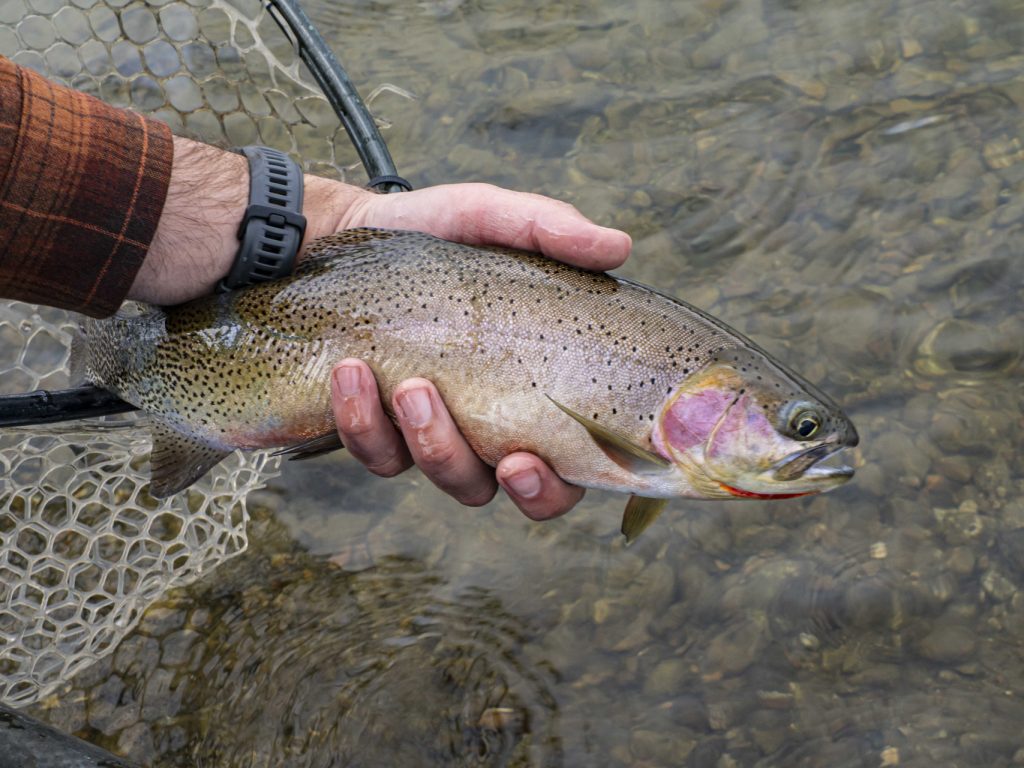
Two species of native trout, westslope cutthroat and bull trout, are of Special Concern to the State of Montana. Once abundant in the Bitterroot and other western Montana drainages, they now occupy only a small percentage of their former range. Thanks to its cold temperatures and clean water, the West Fork of the Bitterroot is one of the last strongholds for these trout.
Sediment Pollution: Choking Breeding Habitat
To operate as a mine, several miles of road would be constructed for trucks to access the mining area. Road building and ore extraction from mining operations will cause erosion increasing sediment, or fine dusty debris, entering the West Fork and Bitterroot River. The West Fork Bitterroot River is already impaired by sediment erosion, with road erosion contributing 3,041 tons of sediment a year. The West Fork is already degraded by sediment, requiring a 60% decrease in sediment coming from surrounding dirt roads; more road building and heavy equipment traffic in Sheep Creek would only worsen sediment erosion into the river (2018 DEQ Integrated Report, and the Bitterroot WRP). Sediment damages breeding habitat by suffocating fragile eggs and will also degrade populations of aquatic insects that other birds, fish, and mammals rely on to survive.
Acids, Toxins, Chemical Pollution: Loss of Clean Water
Acids used to separate REE release toxic elements from the ore. Mines like this are known for releasing radioactive chemicals like thorium, arsenic, and fluorine (Rare Earth Mining – Science News). Even in small doses, these chemicals can lead to poisoning of soil and groundwater. These chemicals also increase the risk of disease in residents, including various cancers and skeletal fluorosis. When water polluted with these chemicals spills into the West Fork, the impact would be catastrophic to all trout, aquatic life, and wildlife in the entire Bitterroot River system.
5. How is the West Fork a uniquely important fish habitat?
The upper West Fork of the Bitterroot is home to a ‘metapopulation’ that is “one of the largest connected westslope cutthroat (WCT) populations in the state of Montana. Maintaining this intact population is especially important for long-term westslope cutthroat trout conservation (FWP, 2025 “Federal Aid Job Progress Report, Federal Aid Project Number: F-113,” pg. 49).” The metapopulation includes both resident and migratory trout. 2024-25 genetic tests show that West Fork WCT population still have 99.9% or higher genetic purity and very high genetic diversity. The upper West Fork WCT population is a key focus within MT Fish, Wildlife and Park’s (FWP) Conservation Strategy for the species in western Montana.
As FWP’s fishery biologist for the Bitterroot, Jason Lindstrom recently said: “[The upper West Fork] is the best thing we have going in the Region by far. We have 180 miles of genetically pure cutthroat habitat with a very high degree of genetic diversity amongst them. This is a really, really important cutthroat population. We are calling this a Mega Meta population, which means it’s just a giant connected population. This is something that we really want to take care of the best we can. (Bitterroot Star, January 20, 2026).”
The upper West Fork is also home to a relatively robust population of bull trout. Sampling data for Sheep Creek in 2023 revealed the stream’s fishery composition included 56% WCT and 38% bull trout.
Pollution in this unique fish habitat will create an exceptionally negative impact to fish populations in the West Fork of the Bitterroot.
6. How would working lands be affected by a mine in Bitterroot Headwaters?
Over 1,000 farms and ranches operate in the Bitterroot (source). They uphold both a traditional way of life and a cornerstone of our economy. Painted Rocks Reservoir holds roughly 32,000 acre-feet (af) of water. That’s 10.6 billion gallons. 10,000 af is delivered to working lands as irrigation water, with 15,000 af used to maintain adequate flow in the Bitterroot River. Water availability for these local operations is already stressed by unplanned, or unsustainable, development, more rapid and less reliable release of snow melt, and more.
Rare earth mines can use massive amounts of water (source). US Critical Materials, the prospecting company seeking to develop a mine in Bitterroot headwaters, has not shared complete, adequate, or final details about what their exploration, extraction, or processing methods might entail. Until we learn more, we cannot calculate how much water they will use. An additional, large extraction of water that would normally flow to Painted Rocks and to downstream irrigators is a concern for working lands.
Rare earth mines have a reputation of causing long-term pollution to waters (source). Given the proposed mine location is in West Fork headwaters, just upstream of Painted Rocks Reservoir, any negative impacts to water would collect in Painted Rocks before being delivered to the River and to thousands of people who irrigate their land with this water source.
7. How would recreation be affected by a mine in Bitterroot Headwaters?
Our local economies are dependent on public lands, natural resources, and clean water. Consider industries and interests like hunting, fishing, rafting, off-road or OHV sports, farming and ranching, hiking, wildlife viewing, and more. 97% of residents agree outdoor recreation is important to our quality of life (ITRR). Local people enjoy these ways of life, and our economy is dependent on a massive tourism and recreation industry.
Recreation tourism is one of Montana’s top industries ranking second behind agriculture, and the same is true for Ravalli County. Tourist spending for ‘outfitting and guide services’ is the fourth largest category of spending after lodging, food, and gasoline.
Roughly half of guides booked were for fishing (ITRR). In 2023 tourists spent $7.5 million dollars on guiding services in the Bitterroot Valley (ITRR). The tourism industry here revolves in part around the River. A polluted River would be disastrous to this cornerstone industry that supports many jobs and livelihoods. In total, tourists spent $67 million dollars in the Bitterroot in 2023. Economic value of trout fishing on the Bitterroot is very high. It is home to several sport fishing trout species, westslope cutthroat, rainbow and brown. These species have contributed enormously to the local tourism economy and real estate values.
People who visit the Bitterroot specifically to fish spend an average of $750 angling day, and much of this spending goes directly beyond direct fishing services, to local businesses and producers. An ‘angling day’ counts each day a person went fishing. FWP estimate 93,720 resident angling days and 59,842 tourist days on the Bitterroot River in recent years (total 153,562 angling days; not counting lake fishing; FWP) . In 2023 the Bitterroot River ranked 7th in the state for total angler days and 1st in the region (FWP). The money anglers spend in the Bitterroot benefits several local industries and generates hundreds of jobs. Consider too that each angler pays a conservation fee for a fishing license, bolstering state conservation programs for hunting, recreation, community well-being, and more.
8. How is the Sheep Creek area important to Bitterroot Wildlife?
The approximately seven square mile area of the proposed Sheep Creek mine supports iconic species of resident and migrating wildlife, like wolverine, rocky mountain sheep, elk, mountain goats, and Northern Rockies fisher. It also provides exceptional wildlife habitat suitable for recovery of locally extinct wildlife like lynx and grizzly bears. Several of these species depend on wild, open lands. In addition to being displaced by development disturbance, roads built for exploration or mining severely degrade habitat quality even after the commotion of development is gone. The proposed mining location sits within a critical linkage area for connected wildlife habitat.
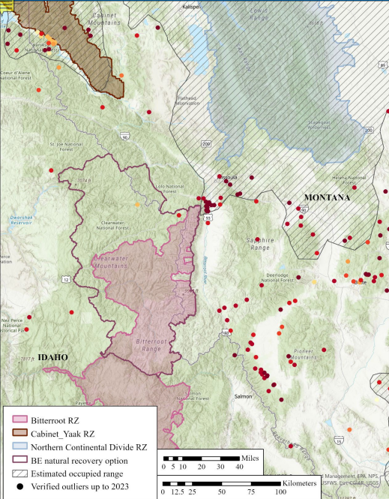
The US Fish and Wildlife Service’s recovery plan for grizzly bears, listed as threatened under the ESA, relies on natural migration into the Bitterroot Recovery Area. The Idaho/Montana state line near Sheep Creek is the only existing wildland migration corridor through the highly populated Bitterroot Valley. The corridor is a ‘Broadway’ for grizzly bears heading into the US Fish and Wildlife Service designated Bear Recovery Area, and the proposed mine site spans this at-risk linkage area. In other words, the claimed mining area contains rare and valuable habitat from ridge top to river bottom.
Rare Earth Mining Background & Proposal Context
1. What is a Rare Earth Element?
Rare earth elements (REE) are a group of 17 elements used in electronics, energy systems, and defense technologies. Their value comes from magnetic, catalytic, and optical properties that are hard to replace in some applications. Neodymium and praseodymium are ingredients in high-strength permanent magnets. Dysprosium is added in smaller amounts to help those magnets keep their strength at high temperatures. These magnets are used in electric motors, wind turbine generators, and many electronic devices. Cerium is widely used to polish glass, including flat-panel display glass, and it is also used in catalytic converters. Lanthanum is used in petroleum refining, camera lenses, and nickel-metal hydride batteries, especially in hybrid vehicles. Europium, terbium, and yttrium are important in phosphors used in screens and lighting.
Rare earths are strategically important because supply chains are vulnerable to disruption. The United States classifies them as critical minerals and still relies heavily on imports of rare-earth compounds and metals, with China the leading source. That matters for advanced manufacturing, energy technology, and national security.
Although called “rare,” REEs are not scarce on the planet but not often found in high concentrations.
2. What are the steps involved in mining rare earth elements?
While rare earth ores are mined and concentrated in the United States, the subsequent steps required to produce magnets primarily occur overseas, particularly in China. Almost all the value of rare earth elements is created in steps 3-5. In other words, though the elements are needed for technology applications, Montana would gain little benefit from producing ore. The process involves:
- Mining rare earth ores or rock containing REE
- Concentrating the mined ores.
- Separating the most valuable rare earth elements from other minerals and from other rare earth elements.
- Processing the rare earths into metals and alloys.
- Manufacturing permanent magnets, motors, sensors, actuators, electric vehicles, and consumer electronics.
3. What are typical negative impacts of REE mining?
There are different processes used in REE mining. We have not yet learned what process US Critical Minerals would propose to use at the headwaters mine.
Typically, the process used in open-pit extraction followed by crushing and chemical extraction. The extraction process generates toxic and irreversible water contamination problems while depleting amount of water available to other uses. In the case of Sheep Creek Mine, miles of new roads would be built and rocks without ore, known as overburden, would be blasted away and piled somewhere. This would create erosion and sediment pollution problems for the river. The ores would be milled and mixed with strong acids like hydrochloric or sulfuric to ‘leach’ out the REEs or dissolve them into a solution. The waste materials, called ‘tailings’, would contain hazardous substances like lead, arsenic, copper, thorium, and possibly asbestos. Operators have ways of attempting to contain these chemicals but it is not uncommon for polluted water to leak or spill.
Exploring alternative methods that extract rare earths from existing mine waste is being developed to avoid the creation of new mining sites. It is worth noting that current Mining and Superfund laws prioritize new drilling over extraction from existing tailings due to liability issues. And, emerging technologies aim to significantly reduce water consumption and pollution. However, these methods are still being developed.
4. Where is the proposed mine? How big will it be?
The proposed mine is located at the juncture of the West Fork of the Bitterroot River and Sheep Creek. The West Fork runs through the claims and some of the high values deposits lie just 200 yards from the river. The claims lie in the headwaters of the 155-mile Bitterroot River. It is located 13 miles upstream of Painted Rocks Reservoir and 36 miles south of Darby. US Critical Materials (USCM) owns 336 mining claims across 11 square miles in the Sheep Creek and West Fork drainage of the Bitterroot National Forest. The mine’s proximity to the Bitterroot River poses a significant risk of pollution, negatively impacting the Bitterroot, the Clark Fork, and beyond. The Bitterroot River watershed spans over 3,000 square miles and supports our quality of life as well as sustainable economic activity such as agriculture and tourism.
5. What is an example of how a REE mine has operated in the USA?
The only active REE mine in the US is the Mountain Pass Mine, located in the Mojave Desert southwest of Las Vegas. The mine has operated intermittently since the 1950s. It is important to note that in 1997, the current owners of the mine were fined for over 60 different toxic waste spills and ordered to complete cleanup efforts. At least 60 separate spills dumped an estimated 2,000 metric tons (530,000 gallons) of wastewater containing radioactive thorium into the valley.
The combination of cleanup expenses and increased competition from China’s REE industry led to the mine being idled through most of the 2000s. It reopened in 2017 and now operates under MP Materials. A new REE mine has recently begun operations in Wyoming [link].
6. Why is the government advocating for more REE extraction in the USA?
Rare earth elements are vital to much of the technology we use every day, as well as defense technology. Since the early 1980s, China has mined, processed, and sold the vast majority of REEs around the globe. Dependence on external sources for vital minerals creates a difficult geopolitical situation for any countries, including the US, that are unable to produce REEs themselves. Producing and processing REEs in the US could provide greater resource stability for both private and government/military needs.
8. What companies are pursuing development of the Sheep Creek minerals?
US Critical Materials Corp. is the start-up company exploring and seeking to develop rare earth and critical mineral extraction at Sheep Creek. US Critical Metals Corp., a Canadian company, was a major investor in US Critical Materials, issuing the funding that progresses development for Sheep Creek.
However, they rescinded their partnership in early 2026. US Critical Materials would not be the company to execute mining at any large scale – they are just the exploration company. USCM would need to secure appropriate permits before partnering with a large mining company to do the actual excavation.
We have yet to receive return communication from USCM. Below is an excerpt from an interview with their Executive Chairman: While he cautioned that opening a mine “takes years,” Ed Cowle, U.S. Critical Materials’ executive chairman, told me he thinks the bipartisan support for shoring up domestic supplies of critical minerals means “we could fast track” the project. “We’re optimistic that the climate is right for everything to be sped up,” he said by phone.
9. What does USCM say about how their mining operation will impact the Bitterroot?
US Critical Materials, the company seeking to develop a mine in our Valley has not said or promised anything to the people of the Bitterroot about how it will conduct its mining processes. They have not interacted with the local community at all, undermining our ability to fully understand or agree to any proposed alterations to our waters.
While US Critical Materials representatives have made no contact with local communities they have spoken publicly about their goals in mine development. In an interview with S&P Global, Harvey Kaye, executive chairman of US Critical Materials, said, “We believe… permits will come in the near term, enabling us to start bringing some volume production in 2026” and that their “…first priority is shareholder value creation.”
10. Are there better places in Montana to mine rare earths?
Yes. The Montana Bureau of Mines and Geology has identified many areas with rare earth bearing materials around our state (MBMG1). Butte, in particular, has the minerals and infrastructure to be a world leader in critical mineral production, including rare earth elements (MBMG2). Viable sources also exist in coal ash, acid mine drainage, and legacy mine waste (MBMG3). Mine wastes are already on the surface, which lowers landscape impacts while also helping address pollution from old sites. Re-mining these materials would help clean-up Montana’s worst environmental problems and create more and cleaner water. Montana should look first at already-disturbed sites and mine waste rather than opening a new industrial mine in a sensitive headwaters area.
Process, Timeline, Permitting, and Local Control
1. What is the ‘Fast Track’ process and how does it influence the review process for mining projects?
“Fast-track permitting” under FAST-41 is a federal process that shortens Federal-level environmental review timelines for large projects. It does not eliminate permitting requirements, but it accelerates them by limiting the time agencies and the public have to review and comment. Fast tracking means the mine could move forward with less environmental scrutiny than a typical hard rock mine. The exploration phase for the ‘Sheep Creek Project’ was added to the Fast Track Program on November 19, 2025 (project page, press release).
FAST-41 applies only to federal agencies and does not override Montana’s permitting laws. If the company begins large-scale ore removal, it will need permits from Montana DEQ, including mine reclamation, water quality, and air permits. Montana DEQ has not issued state mining permits to USCM. If the project proceeds to large-scale ore removal or affects state waters, DEQ involvement will be required. That could trigger additional environmental review and public input independent from Federal regulations.
2. What steps do we typically expect mine dis/approval to go through? Or, what does the decision making timeline around a mine in public lands typically look like?
The potential hard-rock mine is on Forest Service land and will need to go through state and federal approval processes. Different phases of the project will have distinct activities, requiring different approval and adjustment processes. This process typically takes 2+ years.
- (Federal) Notice of Intent: Operators submit an NOI to the Forest Service for activities that may cause minimal disturbance, like hand drilling and sampling. The Forest Service approves activities.
- (Federal) Plan of Operations: Operators submit a POO for activities that cause significant disturbance, like test drilling with heavy machinery. Activities cannot take place until the POO is approved.
- The Plan is available for review and public input during the NEPA process.
- (Federal) NEPA: NEPA is the National Environmental Policy Act, a law requiring federal agencies to evaluate environmental impacts of proposed actions before making a decision. This national policy for environmental protection mandates that agencies consider environmental effects, including those on human health and well-being. The process often involves preparing an Environmental Assessment (EA) or a more detailed Environmental Impact Statement (EIS). Public input is mandated. Public hearings may be offered.
- Large hard-rock mines commonly trigger an EIS due to the scale of anticipated impacts. An EIS involves longer public scoping and draft/final public comment rounds
- (Federal) Section 404 Clean Water Act: Any discharge to water requires a permit. Public input is mandated during this phase. Other agencies, like Environmental Protection Agency, may also comment.
- (State) Section 401 Water Quality Certification: Montana Department of Environmental Quality must guarantee the operation complies with state water quality standards. Public input is mandated during this period.
- (State) Montana MPDES, Montana Pollutant Discharge Elimination System: If mining will discharge waste water or treatment water, a MT MPDES from Montana DEQ is required. Public input is required and sometimes public hearings are offered.
- (Federal) Section 7 Endangered Species Act: If activities may affect Endangered Species or Critical Habitat, US Fish and Wildlife Service will active a Biological Assessment. This step is an interagency process, not a public hearing, but the NEPA document will typically share impacts to species, and is open to public comment.
- (Federal) Section 106 National Historic Preservation Act: Designed to consider effects on historic resources. Agencies must involve consulting parties representing the public.
- (State) MT Air Quality Permit: Montana DEQ Air Quality Bureau will issue a permit approving proposed operation of construction, generators, processing plants, and other activities that may cause air pollution.
- Road Permits: Use or upgrade of USFS roads may require Special Use Permits. If local roads are used for operations, a County permit may also be required.
3. What is an Environmental Impact Statement (EIS)?
An EIS is required under the National Environmental Policy Act (NEPA) for any project that might significantly affect the environment. An EIS is a decision-making tool. It lays out both positive and negative environmental effects of a proposed action. Every EIS includes alternative actions, including the impact of a “no action alternative.” The U.S. Army Corps of Engineers is currently in the process of developing an EIS for the Pebble project. Its website includes information about public input periods and documents related to that effort.
4. Where are we currently in this timeline? What milestones have passed so far?
See the complete milestone timeline in the section below.
5. Who has power to influence this process?
Our downstream communities could face many negatives impacts from this proposed headwaters mine. State and Federal governments have long recognized that communities have a right to influence major projects that may affect their well-being. There will be several opportunities for public hearings and public comment across the permitting process. Given the ‘FAST-Track’ status of the project, the timeline may be unexpectedly short. We should prepare to respond quickly with questions and concerns.
Subscribe to our email updates to stay up to date with major points for public comment. Spread the word to friends and neighbors so they can stay engaged, too.
Sheep Creek Timeline
July 1 2026
The Bitterroot National Forests accepts the Plan of Operations for Exploration and releases it to the public. The USFS does not announce whether a complete Environmental Assessment, including public comment, will be applied. The Federal Permitting Council lists the Environmental Assessment as 'Cancelled' for Sheep Creek.
May 6 2026
US Critical Materials submits a new, revised Plan of Operations to the Bitterroot National Forest.
We sent a direct request on May 6th to USCMs Director of Operations, Rachel Winn, asking for access to the Plan. The request was straightforward: “Given that these materials are already under agency review, and in light of USCM’s stated commitment to transparency, we believe it is reasonable and appropriate to make the current Plan of Operations available to the public as well.” As with several previous requests for information, the company failed to acknowledge the inquiry.
March 30 2026
US Critical Materials rescinds their draft Plan of Operations submitted on December 5, 2025. USCM states they plan to submit a revised proposal by late April 2026. Then, the US Forest Service will conduct a completeness review to determine if the proposal is sufficient to conduct environmental analysis.
December 5 2025
US Critical Materials submits a draft Plan of Operations for Exploration to the Bitterroot National Forest. Submission initiates the permitting timeline.
December 1 2025
Ravalli County Commissioners host public meeting about the proposed mine. Over 700 citizens attended; not one spoke in support.
November 2025
US Critical Minerals adds the ‘SHEEP CREEK PROJECT – EXPLORATION PHASE’ to the Federal Fast-41 Program.
April 2025
US Critical Materials submit Notice of Intent to USDA / Bitterroot National Forest conduct “prospecting and exploration” Sheep Creek, Johnson Creek, and West Fork drainages
March 20 2025
President Donald J. Trump’s Executive Order declaring national emergency over America’s reliance on foreign adversaries for these strategic materials. The Executive Order and several other decisions triggered the Fast-41 Program, designed to ‘Fast Track’ approval of infrastructure and extraction projects.
2024
US Critical Materials submit Notice of Intent to USDA / Bitterroot National Forest conduct “prospecting and exploration”
2023
US Critical Materials submit Notice of Intent to USDA / Bitterroot National Forest conduct “prospecting and exploration”
2022
US Critical Materials submit Notice of Intent to USDA / Bitterroot National Forest conduct “prospecting and exploration”
How to Engage
Protect our Bitterroot River
At this stage, our priority is to help as many people as possible understand the potential impacts of this rare earth mine in Bitterroot Headwaters. Then, we can organize and strengthen a community around collective protection of our waters.
Stay connected and help spread the word.